
Showing posts with label food security. Show all posts
Showing posts with label food security. Show all posts
Tuesday, May 27, 2014


Friday, May 23, 2014
Donkey milk please!!
 |
| Donkeys carry water containers in Kenya. ©The Brooke |
There is a
saying in Swahili Asante ya punda ni
mateke...(The thanks of a donkey are his kicks)
As such
there has often been a perception that the donkey is a very ungrateful
creature.
For this reason the donkey has been branded a beast of burden the
world over suffering several acts of cruelty as they transport different farm
and household goods.
A recommendation
by the
Food and Agriculture organization that donkey milk
be used to
counteract the global demand
of cow milk and other dairy products is
certain to make donkey owners
more kind to
their animals.
The UN
food agency late last
year recommended more usage of milk from a
variety of animals including camels, llamas
and donkeys due to the increasing high milk prices especially in the world.
Apart from goat, sheep and buffalos that are currently
being kept in different parts of the world
for provision of milk Fao recommends that the Alpaca, Moose, Reindeer and Yaks can also be
milked.
 |
A camel herder milks one of his camels in Oman Photo: ALAMY
|
Rapid urbanization
in Africa and the
growing middle class means that
more people are having an increase in their disposable income and as a
result can a afford a change of
lifestyle eating more diary and meat
products.
Fao predicts that
by 2025 diary consumption in developing
countries will grow by 25
per cent because
of population growth and rising
incomes and cow milk which most people are currently dependent on will not be sufficient to
supple the most
vulnerable households.
Consumption of
camel milk has been growing Ethiopia, Mali and Somalia and the trend is quickly
picking up in Kenya.
With their milk being fronted as more nutritious and
healthy. Though it is not for the fainthearted, you will have a thoroughly cleansed
stomach before your intestines get used to the milk.
 |
| Making a quick buck: A woman selling donkey milk to slum dwellers in Vijayawada. — PHOTO: V.RAJU |
Its popularity
has vastly spread that it is not common for one to order camel milk tea of the
menu in a restaurant in Nairobi. Am guessing though in the next five years we
will be doing the same for donkeys?
Monday, May 5, 2014
Building better breeds the community way in Ethiopia
Livestock is considered one of the main
contributors to the GDP of African countries and as such their health and productivity
are of great importance.
Livestock farmers are constantly looking for
higher quality breeds whose increased productivity equals greater financial
returns.
While crop farmers are more open to
higher yielding varieties introduced by research institutions, animal keepers
are less accommodative to such ‘lab breeds’.
More often than not farmers tend to borrow
from one another the fattened bull or ram for a week in order to service their
females
It is no wonder that the community based
breeding programs introduced in some rural communities in Ethiopia have begun
yielding tremendous results.
 |
| Picture courtesy Charlie Pye-Smith/ILRI |
The International Center for Agricultural
Research in the Dry Areas (ICARDA), the International Livestock Research
Institute (ILRI), the University of Natural Resources and Life Sciences (BOKU),
and partners from the National Agricultural Research System are implementing breeding
programs in Bonga, Horro and Menz with three different sheep breeds.
The project is aimed at improving the
productivity of the sheep and increasing the incomes for the 360 households.
Initially the superior variety of rams were identified from among the farmers
and which could be exchanged in
order to breed more value
animals.
The animals identified by local community
members are then exchanged by farmers within a cooperative based on an agreed
upon model.
The committee checks at the conformation,
color, horn type, tail type and other criteria in decision making.
If
a farmer with a prized ram wishes the cooperative is at liberty to purchase it
in order to continue sharing the valued traits.
More details of the project can be gotten here or download the breeding productivity report
Tuesday, April 22, 2014
Mobile app provides forecasts for Rwandan coffee farmers
Technology is great! It helps you do stuff you never thought you would
be able to and in quite a short time.
In the sphere of agriculture technology
has helped improve the quality of seeds and enable farmers easily access
extension services and increase their productivity.
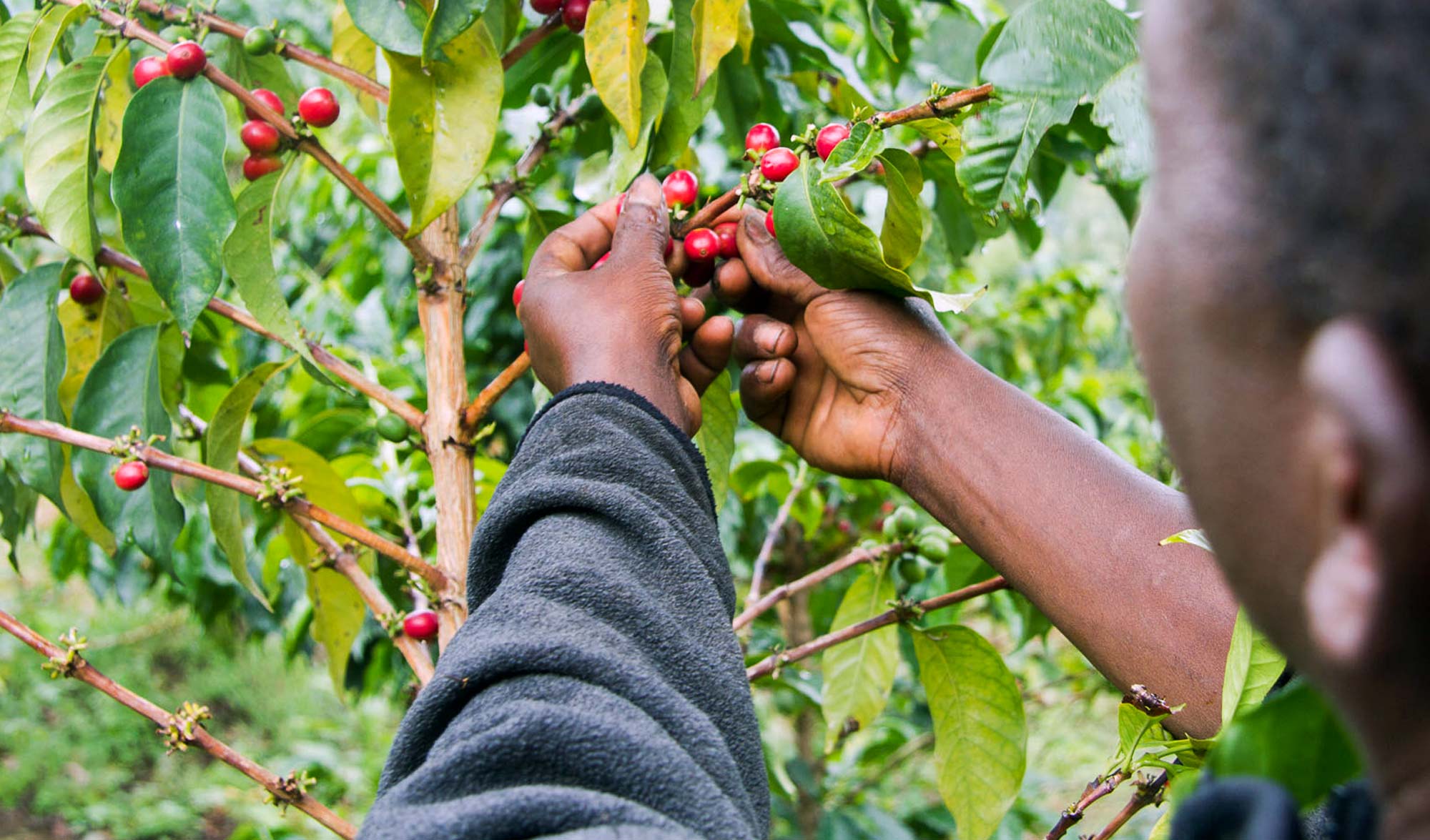
Rwandan coffee farmers are
set to get a boost
in the fight against
coffee rust with the creation of
a mobile app created by a startup incubated
at ESA in the UK.
 The app will enable the coffee farmers
protect and improve their
crops by providing highly localized weather forecasts helping them make the best
decisions at the right time.
The hyper local forecasts can alert farmers to changes in rain patterns and any disease
threat.
The weather safe coffee farmer edition app can run on multiple mobile software
like Apple ios, Android and Blackberry.
For more information
Thursday, March 27, 2014
How does index based insurance work?
Index-based livestock insurance is slowly gaining popularity in
North Eastern Kenya mainly because of the unpredictable weather, which
decimates their livestock.
Andrew Mude, a programme officer with the
International Livestock Research Institute, says insuring
livestock and assessing the value of damage during severe drought may
not be profitable for conventional insurers.
“It is difficult and costly for assessors to come to the arid and semi-arid areas to establish the cause of death for animals,” he said
“It is difficult and costly for assessors to come to the arid and semi-arid areas to establish the cause of death for animals,” he said
Index insurance, therefore, insures the pastoralists against conditions that lead to stock losses.
“The key nutritional input for livestock is forage and there is a very big correlation between the availability of forage and health of livestock,” he explained.
“The more limited the forage, the more likely the animals will die.”
To assess the scarcity of forage, Ilri uses various sensors, like those owned by Nasa, European Union and the other research satellites to tell the level of photosynthesis activity.
The high resolution sensors normally cover areas
of 250 metres by 250 metres, taking photos of the vegetation in a
particular area every 10 days.
When the research began in 2008, Ilri was using
satellite images covering eight square kilometres, which, over the
years, they have scaled down to improve the accuracy of their
predictions.
The data collected on the availability of grass and vegetation is measured against data on livestock death from both the arid lands management programme and the World Bank.
A model with a precise relationship between forage availability and livestock death is formed, leading to the formation of an index-based insurance cover for a particular area.
 |
| Images of the devastation the severe drought of 2011 had on livestock in the Horn of Africa PHOTO: OXFAM |
If the trigger level is reached in a particular area, the insurance company compensates the affected pastoralist, regardless of livestock loss.
“The more the index is above the trigger levels the higher the payout, which enables them to buy feeds for the livestock and compensates them against any loss they may have incurred,” he said.
Apart from insuring livestock, the indexing can be used to insure crops like maize and wheat in areas where farmers rely on them for their livelihood but productivity is affected by adverse weather.
Wednesday, March 19, 2014
Fears as GM traces in convetional foods grow
The United Nation's Food and Agriculture Organisation (FAO) has,
in a new report, raised the alarm over the increased cases of genetic
contamination in globally traded foods.
The survey conducted in 193 countries between February and June last year showed that more conventional foods were being found to have genetic modification (GM) contamination.
The report comes at a time when Kenya is considering maize importation to plug a deficit following poor production last year.
With traditional white maize import sources facing challenges of their own it is expected that Kenya’s imports will be sourced elsewhere.
According to the FAO report the increase in
contamination has impacted global import and export trade, especially
for countries with zero tolerance to genetically modified foods.
FAO reported that over the period of the survey, 25 countries across the globe blocked imports after finding traces of GMOs.
Incidences of discovery of genetically modified material in non-GM food, the report says, has been on the increase for the last 12 years, with cases more than doubling in the last five years.
Between 2002 and 2009, 60 cases of contamination were reported among the surveyed countries compared to the 138 cases reported up to last year.
The island of Madagascar destroyed a consignment of maize it had imported from France after it was found to have traces of GM contamination.
Last year the Namibian Agronomic Board (NAB) reprimanded individuals deemed to be responsible for producing and marketing maize products that allegedly contained GM in a consignment imported from neighbouring Tanzania.
The report noted that while the number of cases of contaminated consignments was relatively smaller than the total amount of food and feed traded globally on any day, the increased occurrence is a worry as it leads to costly trade disruptions.
In most cases the genetically modified crop is authorised for use and sale in one country but may not be legalised in the importing country. If traces of GM are found in a non-GM consignment, the shipment may be destroyed or returned to the country of origin.
Levels of contamination in human food and animal feed varied from one country to another, with a general range between detection of low levels of GM crops that have been approved after a food safety assessment to the adventitious presence level where unintentional presence of GM crops that has not been approved on a food safety assessment in any country was discovered.
FAO said that trace amounts of GMO could be mixed with non-GM food and feed crops by accident during field production or during processing, packing, storage and transportation when the two interact.
The FAO report also identified the inadequate separation between
commercialised and field trial production areas as a major contributor
to the resulting trade risks.
The fact that different GMO policies exist between trading partners also raised the possibility of imports being rejected over contamination.
Botswana, Congo, Cape Verde, DR Congo, Madagascar, Mozambique and the Gambia were among African countries included in the survey.
Others were Mali, Morocco, Somalia, Namibia, Sudan, Niger, Seychelles and Togo.
Linseed, rice, maize, rice cracker and noodles were the most common contaminated foods, with the traded papaya, pet food, canola and soybean products also showing some levels of GM contamination.
Most of the shipments found to have low levels of contamination came from the US, Canada and China. The increased incidence of reported contaminated consignments has been attributed to the increased production of genetically modified crops around the globe.
The International Service for the Acquisition of Agri-Biotech Applications (ISAAA) estimates that the total acreage of biotech crops increased by five million hectares from 2012 to reach 175 million hectares in 2013.
In their global status of commercialised GM crops 2013, ISAAA noted that of the 27 countries that had grown genetically modified crops, 19 were developing countries that planted an acreage that exceeded that of the industrial nations.
The leading growers of genetically modified crops last year were the US, Brazil, Argentina, India and Canada.
ISAAA also identified soybean, cotton, maize and canola as the major biotech crops planted last year.
Seventy nine per cent of global planting, equivalent to 84.5 million hectares of GM soybean, was grown in 11 countries while 23.9 million hectares of genetically modified cotton was grown in 15 countries last year, representing 70 per cent of global planting.
About 57.4 million hectares of maize, considered a staple food in several African countries, planted last year was genetically modified representing 32 per cent of global planting while 8.2 million hectares of GM canola was grown in four countries in 2013.
Wednesday, March 5, 2014
Tanzanian farmers get taste of mobile extension services
Extension services in Tanzania are set to go mobile thanks to a Norwegian funded program at the Sokoine University of Agriculture.
The new system will help farmers access the vital market information as well as pass on information on various technologies to use to improve farm productivity.
The system will enable the little number of extension workers to reach as many farmers as possible.
According to reports from Tanzania the Enhancing Pro-poor Innovations in Natural Resources and Agricultural Value-chains (Epinav) Program is currently being tested in Kilolo in Iringa and Kilosa districts in Morogoro region.
Kenya’s well developed technology sector has enabled many individual and organizations to come up with both web based and mobile platforms that help farmers and other players within the agricultural sector value chain.
If technology is integrated well with agriculture has the potential to increase productivity and the socio-economic status of many smallholder farmers in the continent.
Subscribe to:
Posts (Atom)