Showing posts with label ICT4AG. Show all posts

Tuesday, April 22, 2014

Mobile app provides forecasts for Rwandan coffee farmers


Technology is great! It helps you do stuff you never thought you would be able to and in quite a short time. 

In the sphere of agriculture technology has helped improve the quality of seeds and enable farmers easily access extension services and increase their productivity.


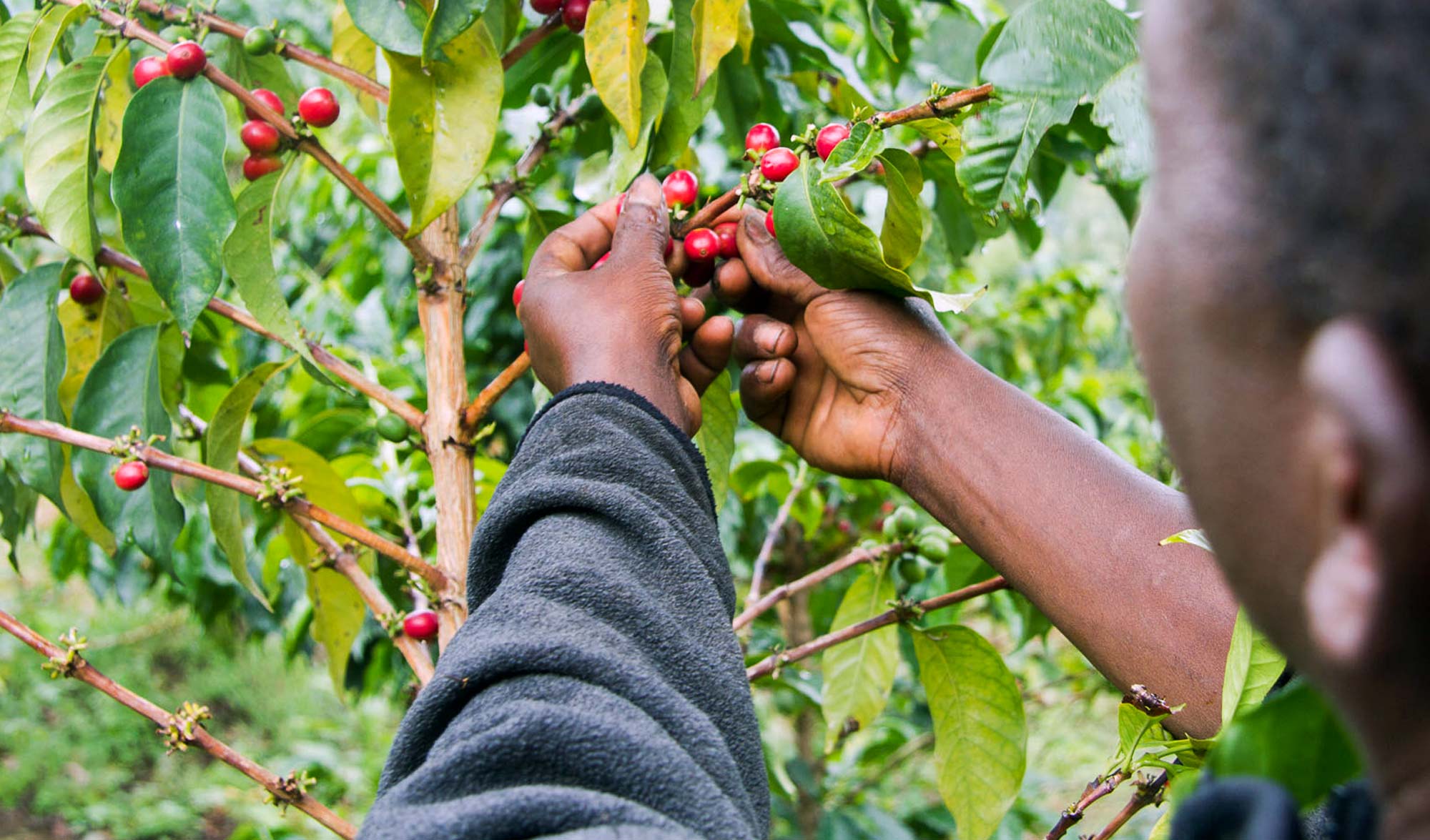
Rwandan coffee  farmers are  set to  get  a boost  in the  fight  against  coffee rust with the  creation of a mobile app created  by a startup incubated at  ESA in the  UK.

The  app  will enable the   coffee  farmers  protect and improve their  crops  by providing  highly localized weather  forecasts helping them make  the best  decisions at the right time.

The hyper local forecasts can alert farmers to   changes in rain patterns and any disease threat. 

The weather safe coffee farmer edition app can run on multiple mobile software like Apple ios, Android and Blackberry.


For more information


Thursday, March 27, 2014

How does index based insurance work?

Index-based livestock insurance is slowly gaining popularity in North Eastern Kenya mainly because of the unpredictable weather, which decimates their livestock.

Andrew Mude, a programme officer with the International Livestock Research Institute, says insuring livestock and assessing the value of  damage during severe drought may not be profitable for conventional insurers.

 “It is difficult and costly for assessors to come to the arid and semi-arid areas to establish the cause of death for animals,” he said

Index insurance, therefore, insures the pastoralists against conditions that lead to stock losses.

 “The key nutritional input for livestock is forage and there is a very big correlation between the availability of forage and health of livestock,” he explained.

 “The more limited the forage, the more likely the animals will die.” 

 To assess the scarcity of  forage,  Ilri uses various sensors, like those owned by Nasa, European Union and the  other research  satellites to tell the level of photosynthesis activity. 
 
The high resolution sensors normally cover areas of 250 metres by 250 metres, taking photos of the vegetation in a particular area every 10 days.
 
When the research began in  2008, Ilri  was using satellite images covering eight square kilometres, which, over the years, they have  scaled down to improve the accuracy of their  predictions.

The data collected on the availability of grass and vegetation is measured against data on livestock death from both the arid lands management programme and the World Bank.

A model with a precise relationship between forage availability and livestock death is formed, leading to the formation of an index-based insurance cover for a particular area.

Images of the devastation the severe drought of 2011 had on livestock in the Horn of Africa PHOTO: OXFAM

If the trigger level is reached in a particular area, the insurance company compensates the affected pastoralist, regardless of livestock loss.

“The more the index is above the trigger levels the higher the payout, which enables them to buy feeds for the livestock and compensates them against any loss they may have incurred,” he said.


 Apart from insuring livestock, the indexing can be used to insure crops like maize and wheat in areas where farmers  rely on them for their livelihood but productivity is affected by adverse weather.

Wednesday, March 5, 2014

Tanzanian farmers get taste of mobile extension services


Extension services in Tanzania are set to go mobile thanks to a Norwegian funded program at the Sokoine University of Agriculture.


The new system will help farmers access the vital market information as well as pass on information on various technologies to use to improve farm productivity.


The system will enable the little number of extension workers to reach as many farmers as possible.
According to reports from Tanzania the Enhancing Pro-poor Innovations in Natural Resources and Agricultural Value-chains (Epinav) Program is currently being tested in Kilolo in Iringa and Kilosa districts in Morogoro region.


Kenya’s well developed technology sector has enabled many individual and organizations to come up with both web based and mobile platforms that help farmers and other players within the agricultural sector value chain.


If technology is integrated well with agriculture has the potential to increase productivity and the socio-economic status of many smallholder farmers in the continent.


Thursday, February 27, 2014

Here's to financing Kenyan farmers!

Four fourth-year University of Nairobi students pursuing Computer Science have embarked on linking farmers with financiers.
While there has been a vigorous campaign in the last two decades to get Kenyan youths back to the farms, the quartet has taken a more unconventional approach on the matter.
James Kimani, Caroline Muteti, Rita Kimani and Peris Nyaboe have created an online solution that not only profiles farmers and the type of farming they do but also allows them to connect with youths and group investors.
Their platform, Farmdrive, helps to connect individuals interested in farming — and who while finding agriculture profitable have no time for the venture — with farmers looking for money to expand their activities.
“It all started with a regional competition which placed a call through the different technology hubs in the region for agricultural startups that could address the challenge of lack of information which most farmers face, or come up with ways to boost their access (to information) through use of technology,” said Ms Kimani.
The challenge
The classmates got interested in the challenge when the Computing for Development (C4D) lab housed at the university urged students pursuing technology courses to take part in the competition.
During a brainstorming session, the four noted that there were several tools created to enhance information sharing and communication between farmers and extension workers and chose to focus on ways of making it easier for farmers to get finances.
“We all study computer science but we have our specialities which we are using to create synergy. What we are trying to do is revolutionise how farmers get access to financial services in the country,” said Mr Kimani.
Farmers can to feed their revenue and expense information in the Farmdrive application and be able to get a graphical representation of whether or not their agricultural venture has good returns or is a money drain.
“As they continue to do so they are able to build their farm profile within the system and we can analyse how their farming is doing, creating a portfolio of creditworthiness for potential investors,” he said.
Their research on information and finance access by farmers was carried out in Kikuyu, Thika and Kiambu.
The four members of Farmdrive who are keen on linking  farmers to individual financiers

“Most of the farmers we talked to hardly kept records on how much they were investing in their farms and did not track productivity. Farmers who had some form of recording systems said that accessing money from banks and microfinance institutions was too bureaucratic,” Ms Nyaboe said.
“At the same time,” Ms Kimani added, “We had also done research on individuals who were passionate about farming and who had funds to invest in farming but either did not have land or time to do it.”
Although loans are awarded to individual farmers, they are expected to form small groups of five on the platform in order to act as a verification tool and reduce defaulting.
This innovative idea saw them through to the recent Agrihackathon championship in Kigali. While Farmdrive did not make it to the top three innovations, the four were able to network and pitch their ideas to an array of venture capitalists and investors some of who are seeking to invest in their platform.
“The simple bookkeeping application that we had conceived six months ago is not what it is right now. It has undergone several coding and other verification systems to make it simpler and user friendly to farmers. We keep on improving the application,” said Ms Kimani.
Unlike other solutions available in the market which are either Android-based, Farmdrive is built on a Responsive Web Design (RWD) aimed at crafting websites to provide an optimal viewing experience.
This means that farmers interested in using Farmdrive are not restricted to a mobile phone with a particular operating system.
As long as their phone has an internet connection they can access the website whose content adjusts to the screen of connecting device.
While farmers are not charged to use the platform, Farmdrive provides an annual membership fee to investors interested in agriculture. This allows them to access information about farmers on the platform and provides a system through which they can contact them.
“We have checks and balances which ensure that investors are legitimate so that we do not expose farmers to criminals,” said Mr Kimani.
The team has been running a pilot that involves 20 farmers in Kiambu County.
While they have been receiving positive feedback from the users, they are looking to validate their business model before releasing the application to the market by end of the first quarter.
“Agribusiness is a profitable venture and also expansive in nature, for now we are focusing on connecting dairy and poultry farmers to individual investors. In the long run we hope to expand nationwide and to include more farmers, allowing an individual in Nairobi to invest in a maize farm in Trans Nzoia County,” said Ms Kimani.
Mr Kimani said that he was comfortable working with the three female students, who he described as innovative and considerate in the management of the startup.
He said that most of the business decisions are consensual.
“Since we are techies and not quite privy to agribusiness, we have sought experts in agriculture and business to be our mentors and help in validating our business models. If we cannot agree among ourselves about a decision to take ,we seek the opinion of the experts,” Ms Nyaboe said.

Monday, February 10, 2014

Reducing livestock diseases the tech way

Introduced in 2009, the digital pen technology continues to help veterinary officers enhance disease surveillance in arid and semi-arid areas in Kenya.
Forty nine digital pens were distributed to 29 districts across the country in a pilot project carried out jointly by the government in partnership with the Food and Agriculture Organisation (FAO) including Garissa, Tana River, Lamu, Mandera and Malindi.
Over the last two years, the Kenyan government has increased access to the digital pen technology for veterinary officers to an additional 50 districts.
According to Dr Samuel Kahariri, one of the vets who have pioneered the use of the digital pen, the technology has transformed the way disease surveillance was being done.
“We used to do surveillance and disease reporting the conventional way where reports would be written in triplicate, a copy would remain with the official on the ground another with the regional officer and the final one sent to Nairobi which would take about three weeks,” he said.
The pen which is manufactured by a South African company has a camera, processor, memory and Bluetooth .The vet officers in the country use the Bluetooth device in the digital pen to connect it to a Nokia phone model N72 which allows for easy information transmission.
While doing his disease surveillance, a vet would inspect the sickly animal and when writing the report on the digital paper he presses the start button and the infrared camera begins to record all that is being written.
On pressing the send button, the captured report is initially sent to the Nokia phone via Bluetooth before being relayed to a common diseases surveillance reporting server in than 10 seconds.
This in turn helps the veterinary head office in Nairobi map out endemic areas and prepare for any potential disease outbreaks especially for those which can be passed onto humans.
Some of the diseases that the technology has helped to reduce include Anthrax, Foot and Mouth, Rift Valley Fever and rabies.
One of the Veterinary officers use the digital pen for disease surveillance. Photo by FAO
The pen’s memory can store up to 40 such reports.
“The use of this digital pen technology has helped in emergency preparedness for disease outbreaks helping to reduce the loss of livestock especially among pastoralists and we want to ensure that all the 47 counties are connected to ensure even faster reporting,” he said.
In areas where the digital pen is not used, veterinary officers are able to feed the information of sickly animals through a mobile application that also relays the surveillance information in a matter of minutes.

Thursday, November 21, 2013

Technology reignites passion for farming among African youth

For youth in Kenya and other African countries, farming is no longer about dirt, poverty or wasted investments with limited or no returns.
Many young people who have graduated from universities are now quitting the rat race for elusive structured white-collar jobs for the gruelling yet rewarding agribusiness ventures.
While some youths want to be a part of those improving the country’s food security; others are driven by the desire to earn more. While the average age of the African farmer remains at 60, more youth are turning to farming, thanks to the use of technology.
The International Institute for Communication and Development (IICD) in its November report, ‘‘Youth, ICTs and Agriculture,’’ which explores how digital tools and skills influence motivation of young farmers, notes the changing perspective of farming from a back-breaking, labour-consuming task to a much more profitable and honest source of income.
“ICT not only improves the status of the young people using it, but also of the farming sector in general. Those who used to see farming as a last resort source of income now see it as a rewarding business,” the report says.
Last year’s World Bank and Africa Development Bank (AfDB) joint report ‘‘e-Transform Africa,’’ highlighted the potential of ICT in transforming the agricultural sector in various ways including offering financial services for the farmers, providing information on best practises, and providing better risk management.
The joint report recognises that ICT contributes seven per cent of Africa’s GDP, attributing the larger share to mobile phones which have turned into financial credit platforms, newspapers, games gadgets and source of entertainment.
The International Telecommunication Union (ITU) estimates that the mobile penetration in Africa this year stands at 63 per cent with 2.7 billion people using the Internet.
About 93 million people across the continent subscribe to mobile broadband, indicating the growing preference among the population to access Internet on mobile devices.
The agriculture sector contributes 32 per cent of the region’s GDP and employs 65 per cent of the labour force. At the moment, only 183 million hectares in the region are being cultivated while another 452 million hectares suitable for farming are lying fallow.
Alliance for a Green Revolution in Africa (Agra) in their ‘‘Africa Agriculture Status’’ report 2013 identifies the role of innovation and technology development in building productive capacities within the agriculture sector, noting the substantial increase over the past decade.
In an interview with the Business Daily, Michael Hailu, the director of the Technical Centre for Agricultural and Rural co-operation (CTA) said that ICTs and particularly mobile phones have the potential to transform smallholder farming in African economies especially among women who produce 80 per cent of the food.
“African countries spend up to $50 billion a year on food imports. With abundant land, water and cheap labour, there is no good reason why Africa should import so much food,” he said.
While acknowledging the tremendous growth the sector has seen in recent years with increased investments from governments and the private sector, he said it’s time to improve food production.
“To achieve its full potential, smallholder agriculture must be transformed from a subsistence activity to a profitable sustainable business and ICTs play a vital role in the transformation by providing timely advice and information. They help farmers increase their production, make markets more efficient and increase incomes along the value chain,” he said.
Young software developers are finding ways of solving problems like access to information, marketing of produce and seeking finance by using technology and communication tools ranging from social media platforms, community radios, videos, and Internet-based as well as offline mobile applications.
A research paper on the drivers of youth unemployment in Kenya released by the International Labour Organisation in October, says that the country is listed as among those with the lowest youth unemployment rates globally.
While young men and women account for 37 per cent of the working-age population only 20 per cent are employed.
The UN World Population Prospects report, which predicts that by 2050 there would be 17.5 million youth aged between 15 and 24 years in the country, underscores the need to create employment for the close to one million people that enter the Kenyan job market annually.
According to Joseph Macharia, a lecturer at the Jomo Kenyatta University of Agriculture and Technology, one of the main reasons that youth have not taken up farming is because they lack evidence of successful young farmers.
“We have musicians who portray a wealthy lifestyle and whom many youth want to emulate if we create more platforms in which young agriculture champions can showcase what they are earning more youth will venture into agribusiness,” he said.
In addition to the creation of role models, their success stories as well as information on other best practices in agriculture should be on online platforms like Facebook and other social media.
Similar services
“Rather than target those in rural areas, focus on youth in urban areas who are educated and unemployed showing them a sustainable way of making a living through agriculture and they will in turn employ or motivate the youth in rural areas who are keen on moving to the cities,” Mr Macharia said.
Despite the spurring progress in integrating ICTs into agricultural practices, Judith Payne, an e-business advisor working with USAID notes there has been little measurable evidence to show the impact that the technologies have had on smallholder farmers in Africa.
“While we have very many people coming up with applications to help farmers, the areas that they cover is mainly small. Many donors are now looking to fund applications that can be up-scaled, not just by adding more people in that area but taken to another place facing similar challenges with little or no modification,” said Ms Payne.
Her words were echoed by Stephen Muchiri, the chief executive of East African Farmers Federation, who noted that many of the technologies and the information transmitted through them still remained out of reach for many of the farmers.
“While there is a great need to transform smallholder farming in Africa , many of the ICTs that are being advanced are donor-sponsored and target small groups of people which makes it difficult for the technology to spread and most of them tend to die off once the sponsorship is withdrawn,” he said.
He said that there had been a lot of similarities especially in the mobile apps platform where many start-ups and entrepreneurs promoted similar services.
While acknowledging that this left room for business competition and efficiency in the technologies, many of the smallholder farmers were often spoilt for choice.
“We have a lot of information for farmers on weather and planting, agronomy and horticulture but post harvest losses are still a great challenge for many farmers. For instance, if you look at Kenya, between 20 and 50 per cent of the crop is lost at post harvest and it would be good to have solutions that address these areas,” the farmer said.
Speaking with the Business Daily, the knowledge and information management officer with Food and Agriculture Organisation (Fao), Michael Riggs, said that with the global population expected to double by 2050, there is need to identify ways of boosting food production and security across all households in Africa where the bulk of the population will reside.
“ICT provide youth with new opportunities in agribusiness, skills specialisation and dissemination of vital information as technology continues to advance every day,” he said.
Mr Riggs noted that while there was a global excitement phenomenon from the technology explosion and the potential to positively impact livelihoods, reversing the unpopular trend would require more than the sector’s expansion and integration into agriculture.
He added that creation of agricultural interest among the youth requires efforts of both the government and the private sector to create an enabling environment that addresses the economic and socio-cultural aspects.
“There is need to ensure that the positive effect of ICT in agriculture is sustained. Global networks need to ensure that the lessons learned and challenges are being shared and addressed collectively. Governments also need to create enabling environments through policies promoting the use of ICT along with ensuring that they become disseminators developing digital and not just aggregators of information.”
The Fao officer, however, cautioned against the perceptions that ICT would provide a one-in-all solution to the continent’s problems of youth unemployment, food insecurity and poverty in the continent.
“While agriculture is not a dying art, people need not think that ICT will keep youth on the farms, there is need to look at the whole agricultural value chain and see what needs to be done. Digital technology has enabled us reach more people than before but they are enabling tools and not the final solution, they are not a magic bullet.”
Ms Aparajita Goyal, an economist with the World Bank in Washington DC holds a similar view that financial stability and scalability should be key parameters for use of technology in agriculture.
Positive effect
“In order to have a bigger impact we need to use ICTs with a win – win model for both the farmers and other stakeholders. Unless there is a financially sustainable model behind the innovation it is not going to go far,” she said.
According to the World Bank, research has proven that price information transmitted via technology to farmers has had a positive effect on market efficiency and on the farmers’ welfare in sub-Saharan Africa though there is still limited information on the impact of other innovation systems.
Ms Goyal noted that while reaching a small group of people is needed in the initial stages when you are piloting a project, young innovators need to work on frameworks in which the projects can be upscale through public private partnerships in order to have greater impact.
“ICT is not a panacea for development it is a tool and we cannot ignore complementary investments in roads, electricity and infrastructure if we need to tackle the bigger issues of food security in Africa.
Governments have a bigger role to play by creating that enabling environment for the private sector to come in,” she said.