
Showing posts with label Agribusiness. Show all posts
Showing posts with label Agribusiness. Show all posts
Tuesday, May 27, 2014


Friday, May 23, 2014
Donkey milk please!!
 |
| Donkeys carry water containers in Kenya. ©The Brooke |
There is a
saying in Swahili Asante ya punda ni
mateke...(The thanks of a donkey are his kicks)
As such
there has often been a perception that the donkey is a very ungrateful
creature.
For this reason the donkey has been branded a beast of burden the
world over suffering several acts of cruelty as they transport different farm
and household goods.
A recommendation
by the
Food and Agriculture organization that donkey milk
be used to
counteract the global demand
of cow milk and other dairy products is
certain to make donkey owners
more kind to
their animals.
The UN
food agency late last
year recommended more usage of milk from a
variety of animals including camels, llamas
and donkeys due to the increasing high milk prices especially in the world.
Apart from goat, sheep and buffalos that are currently
being kept in different parts of the world
for provision of milk Fao recommends that the Alpaca, Moose, Reindeer and Yaks can also be
milked.
 |
A camel herder milks one of his camels in Oman Photo: ALAMY
|
Rapid urbanization
in Africa and the
growing middle class means that
more people are having an increase in their disposable income and as a
result can a afford a change of
lifestyle eating more diary and meat
products.
Fao predicts that
by 2025 diary consumption in developing
countries will grow by 25
per cent because
of population growth and rising
incomes and cow milk which most people are currently dependent on will not be sufficient to
supple the most
vulnerable households.
Consumption of
camel milk has been growing Ethiopia, Mali and Somalia and the trend is quickly
picking up in Kenya.
With their milk being fronted as more nutritious and
healthy. Though it is not for the fainthearted, you will have a thoroughly cleansed
stomach before your intestines get used to the milk.
 |
| Making a quick buck: A woman selling donkey milk to slum dwellers in Vijayawada. — PHOTO: V.RAJU |
Its popularity
has vastly spread that it is not common for one to order camel milk tea of the
menu in a restaurant in Nairobi. Am guessing though in the next five years we
will be doing the same for donkeys?
Monday, May 5, 2014
Building better breeds the community way in Ethiopia
Livestock is considered one of the main
contributors to the GDP of African countries and as such their health and productivity
are of great importance.
Livestock farmers are constantly looking for
higher quality breeds whose increased productivity equals greater financial
returns.
While crop farmers are more open to
higher yielding varieties introduced by research institutions, animal keepers
are less accommodative to such ‘lab breeds’.
More often than not farmers tend to borrow
from one another the fattened bull or ram for a week in order to service their
females
It is no wonder that the community based
breeding programs introduced in some rural communities in Ethiopia have begun
yielding tremendous results.
 |
| Picture courtesy Charlie Pye-Smith/ILRI |
The International Center for Agricultural
Research in the Dry Areas (ICARDA), the International Livestock Research
Institute (ILRI), the University of Natural Resources and Life Sciences (BOKU),
and partners from the National Agricultural Research System are implementing breeding
programs in Bonga, Horro and Menz with three different sheep breeds.
The project is aimed at improving the
productivity of the sheep and increasing the incomes for the 360 households.
Initially the superior variety of rams were identified from among the farmers
and which could be exchanged in
order to breed more value
animals.
The animals identified by local community
members are then exchanged by farmers within a cooperative based on an agreed
upon model.
The committee checks at the conformation,
color, horn type, tail type and other criteria in decision making.
If
a farmer with a prized ram wishes the cooperative is at liberty to purchase it
in order to continue sharing the valued traits.
More details of the project can be gotten here or download the breeding productivity report
Tuesday, April 22, 2014
Mobile app provides forecasts for Rwandan coffee farmers
Technology is great! It helps you do stuff you never thought you would
be able to and in quite a short time.
In the sphere of agriculture technology
has helped improve the quality of seeds and enable farmers easily access
extension services and increase their productivity.
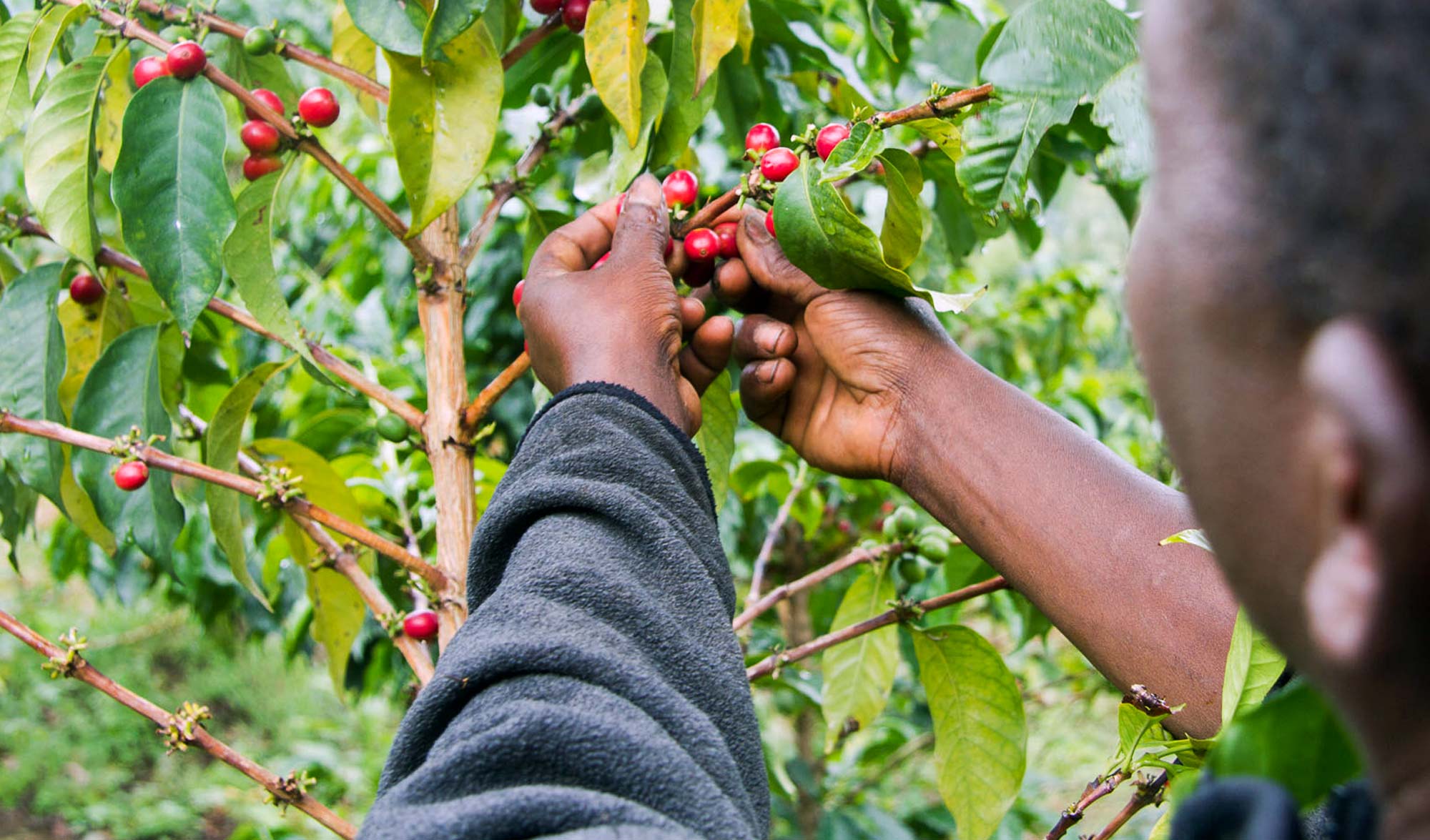
Rwandan coffee farmers are
set to get a boost
in the fight against
coffee rust with the creation of
a mobile app created by a startup incubated
at ESA in the UK.
 The app will enable the coffee farmers
protect and improve their
crops by providing highly localized weather forecasts helping them make the best
decisions at the right time.
The hyper local forecasts can alert farmers to changes in rain patterns and any disease
threat.
The weather safe coffee farmer edition app can run on multiple mobile software
like Apple ios, Android and Blackberry.
For more information
Wednesday, March 19, 2014
Fears as GM traces in convetional foods grow
The United Nation's Food and Agriculture Organisation (FAO) has,
in a new report, raised the alarm over the increased cases of genetic
contamination in globally traded foods.
The survey conducted in 193 countries between February and June last year showed that more conventional foods were being found to have genetic modification (GM) contamination.
The report comes at a time when Kenya is considering maize importation to plug a deficit following poor production last year.
With traditional white maize import sources facing challenges of their own it is expected that Kenya’s imports will be sourced elsewhere.
According to the FAO report the increase in
contamination has impacted global import and export trade, especially
for countries with zero tolerance to genetically modified foods.
FAO reported that over the period of the survey, 25 countries across the globe blocked imports after finding traces of GMOs.
Incidences of discovery of genetically modified material in non-GM food, the report says, has been on the increase for the last 12 years, with cases more than doubling in the last five years.
Between 2002 and 2009, 60 cases of contamination were reported among the surveyed countries compared to the 138 cases reported up to last year.
The island of Madagascar destroyed a consignment of maize it had imported from France after it was found to have traces of GM contamination.
Last year the Namibian Agronomic Board (NAB) reprimanded individuals deemed to be responsible for producing and marketing maize products that allegedly contained GM in a consignment imported from neighbouring Tanzania.
The report noted that while the number of cases of contaminated consignments was relatively smaller than the total amount of food and feed traded globally on any day, the increased occurrence is a worry as it leads to costly trade disruptions.
In most cases the genetically modified crop is authorised for use and sale in one country but may not be legalised in the importing country. If traces of GM are found in a non-GM consignment, the shipment may be destroyed or returned to the country of origin.
Levels of contamination in human food and animal feed varied from one country to another, with a general range between detection of low levels of GM crops that have been approved after a food safety assessment to the adventitious presence level where unintentional presence of GM crops that has not been approved on a food safety assessment in any country was discovered.
FAO said that trace amounts of GMO could be mixed with non-GM food and feed crops by accident during field production or during processing, packing, storage and transportation when the two interact.
The FAO report also identified the inadequate separation between
commercialised and field trial production areas as a major contributor
to the resulting trade risks.
The fact that different GMO policies exist between trading partners also raised the possibility of imports being rejected over contamination.
Botswana, Congo, Cape Verde, DR Congo, Madagascar, Mozambique and the Gambia were among African countries included in the survey.
Others were Mali, Morocco, Somalia, Namibia, Sudan, Niger, Seychelles and Togo.
Linseed, rice, maize, rice cracker and noodles were the most common contaminated foods, with the traded papaya, pet food, canola and soybean products also showing some levels of GM contamination.
Most of the shipments found to have low levels of contamination came from the US, Canada and China. The increased incidence of reported contaminated consignments has been attributed to the increased production of genetically modified crops around the globe.
The International Service for the Acquisition of Agri-Biotech Applications (ISAAA) estimates that the total acreage of biotech crops increased by five million hectares from 2012 to reach 175 million hectares in 2013.
In their global status of commercialised GM crops 2013, ISAAA noted that of the 27 countries that had grown genetically modified crops, 19 were developing countries that planted an acreage that exceeded that of the industrial nations.
The leading growers of genetically modified crops last year were the US, Brazil, Argentina, India and Canada.
ISAAA also identified soybean, cotton, maize and canola as the major biotech crops planted last year.
Seventy nine per cent of global planting, equivalent to 84.5 million hectares of GM soybean, was grown in 11 countries while 23.9 million hectares of genetically modified cotton was grown in 15 countries last year, representing 70 per cent of global planting.
About 57.4 million hectares of maize, considered a staple food in several African countries, planted last year was genetically modified representing 32 per cent of global planting while 8.2 million hectares of GM canola was grown in four countries in 2013.
Wednesday, February 12, 2014
Half acre money maker
At first glance it is easy for anyone to confuse her with a simple market lady.
It is Saturday morning and Pauline Mwangi is
completely dressed down from her usual formal attire during the week and
ready to work on her half-acre farm located at Kasarani in Nairobi.
First she checks on the quails, her most recent
venture on the farm, to see if they have enough food and changes their
drinking water.
Her next stop is the kienyeji
(indigenous) chicken, which she rears in a nearby poultry house after
ensuring that they are in perfect health, she goes on to walk around the
rest of her farm. She has 100 chicken at the moment.
One can be excused to assume that she is in her rural county and not her home in Nairobi.
Ms Mwangi represents a new breed of city women,
those who can have an eight-to-five job and still manage to indulge in
their farming passion.
“When my children were born, I wanted them to have
a healthy lifestyle. At that time there were all these fears about the
origin of most of the food that it was being grown around sewers in
Nairobi so I planted some bananas outside my house,” she said.
Growing interest
Before long she began planting just enough kales, coriander and parsley for her family to consume in a bid to reduce the trips she would make to the market in Githurai and some tokens for those who called at her home.
“Whenever my friends and family would come visit
they would always want to buy some fresh vegetables for their homes and
that was when I decided to scale up my farming into agribusiness,” she
said.
Today, she grows tomatoes, strawberries, cabbages,
kales, pepper, capsicum, spinach, cucumbers, bananas and some maize for
sale to her neighbours, other customers as well as the nearby hotels.
Up scaling her passion was not an easy affair, her husband had to finance part of the capital intensive investments which she supplemented with her savings.
She would deliver three crates of tomatoes to the
hotels thrice a week at between Sh1,000 and Sh1,500 per crate while she
sold a kilo of capsicum for between Sh120 and Sh150 depending on the
market price.
The urban farmer has 600 quails which she purchased mid last year because of the growing interest many people expressed in the bird’s meat. She has even bought an incubator so that she can hatch the quail eggs and continue with a fresh lot even as she sold the older ones.
“Right now my farm is all inclusive,” she said. “Previously I would have to hire a lorry and go all the way to Maasailand to look for manure but now I just use the droppings from the poultry houses.”
Before she turned to the kienyeji (local breed) chicken, Ms Mwangi tried her hand in rearing broilers. Although they matured faster they did not sell as much as she hoped because many of her clients preferred the local breed.
“Quails are like chicken, they even pick on each other so we separate the bullied from the rest of the lot. I first went home and brought some of the local chicken breed to rear but many of the chicks would die and soon I was forced to go back to the village and get a fresh lot,” she said.
She has two greenhouses one in which she has just finished harvesting the third crop of tomatoes and the other in which she is about to get her first capsicum harvest.
Each of the greenhouses is eight by 30 metres in size and cost about Sh250,000 to set up. On average she harvests between 200 and 250 kilogrammes of tomatoes per week and between 100 and 150 kilogrammes of capsicum weekly.
“This was the third time we were harvesting and the tomatoes were very small in size. Rather than have a crop that diminishes in size, I have chosen to uproot them and plant more capsicum,” she explained.
Since it is her first time to plant capsicum Ms Mwangi decided not to restrict herself in terms of looking for market for her crop advertising even on social media and agriculture oriented websites like Mkulima Young.
Daily duties
She has drilled a borehole in one corner and connected the whole farm to a drip irrigation system which makes it easier to water the crops in the mornings and evenings.
As she works as a marketer, Ms Mwangi has timed her deliveries to ensure that she makes them early enough before going to work or after 5pm when she has left the office.
The farmer has hired two people to help in the management of her farm — one dedicated to the poultry and the other whose work is to attend to the crops on the farm.
Getting the right farm help has, however, not been easy she admits as some of the people she hired in the past would not implement the daily duties that she had set out for them, especially after she left for work.
 |
| Ms Mwangi shows off part of her half acre farm in the backyard of her home in Nairobi. |
“I would get back home and find that no weeding or spraying had been done and at other times I would get workers who were not as enthusiastic as I am in farming and would have to let them go,” she said.
“But I have come to realise that the quality of work that they do is directly linked to the benefit they see deriving from their work. I, therefore, try to show them that the having good produce is mutually beneficial to us all.”
Even though she gets to deliver produce to hotels daily, her most valued customers are the neighbours who knock on her door on Saturdays to buy fresh produce each spending an average of Sh1,000 who encouraged her to go into agribusiness.
Her advice to working women who want to try their hand in urban farming is to look for more than one alternative, especially in buying greenhouses in order to get a more genuine company.
“The first crop of your greenhouse may not give you back your investment but the returns are definitely there in farming,” says Ms Mwangi. “It is an art that you keep on learning everyday you drop the crops that you find are hard to move and plant more of those that the market
Sunday, January 5, 2014
Incubator offers hope for agribusiness startups
Entrepreneurs with innovative
agribusiness ideas have an opportunity to be part of a 16-week
incubation programme that will see them develop sustainable ventures.
The initiative dubbed Agribusiness for Impact
Incubator Programme is initiated by the Growthhub platform that seeks to
promote start-ups across the East African region.
In an interview
Patricia Jumi, one of the co-founders of the Nairobi-based incubator,
said that the 16-week incubation would see 12 companies selected and
supported to establish and grow their businesses.
“Many youths still see agriculture as a last
option and think of engaging in it for the short-term gain like farming
just to make money from it even though there is a growing need for a
more progressive kind of agriculture,” she said.
Ms Jumi explained that a paradigm shift of
agriculture to a more capitalist one as in the manufacturing sector
would create more employment opportunities and have greater social
impact.
“People want to be entrepreneurs but they do not
know if their ideas are good enough. We need to help them think beyond
the norm across the whole agricultural chain to enable them create
sustainable industries out of their ideas,” she said.
Youths with creative ideas on agro-processing
businesses, adoption of modern farming practices, improving food
security as well as increasing income generation for farmers have until
January 9 to submit their ideas to the competition.
The selected teams will in February undergo a
four-week intensive training on good business models and addressing
customer needs and how to transform their agribusiness ideas into
start-ups.
After this five teams will be chosen and each will
receive a capital investment of sh430,000 ($5,000) to build a prototype
and test their product or service.
The teams will then have 10 weeks to implement and
execute their business ideas before making their final pitches to
potential investors in May.
Subscribe to:
Posts (Atom)